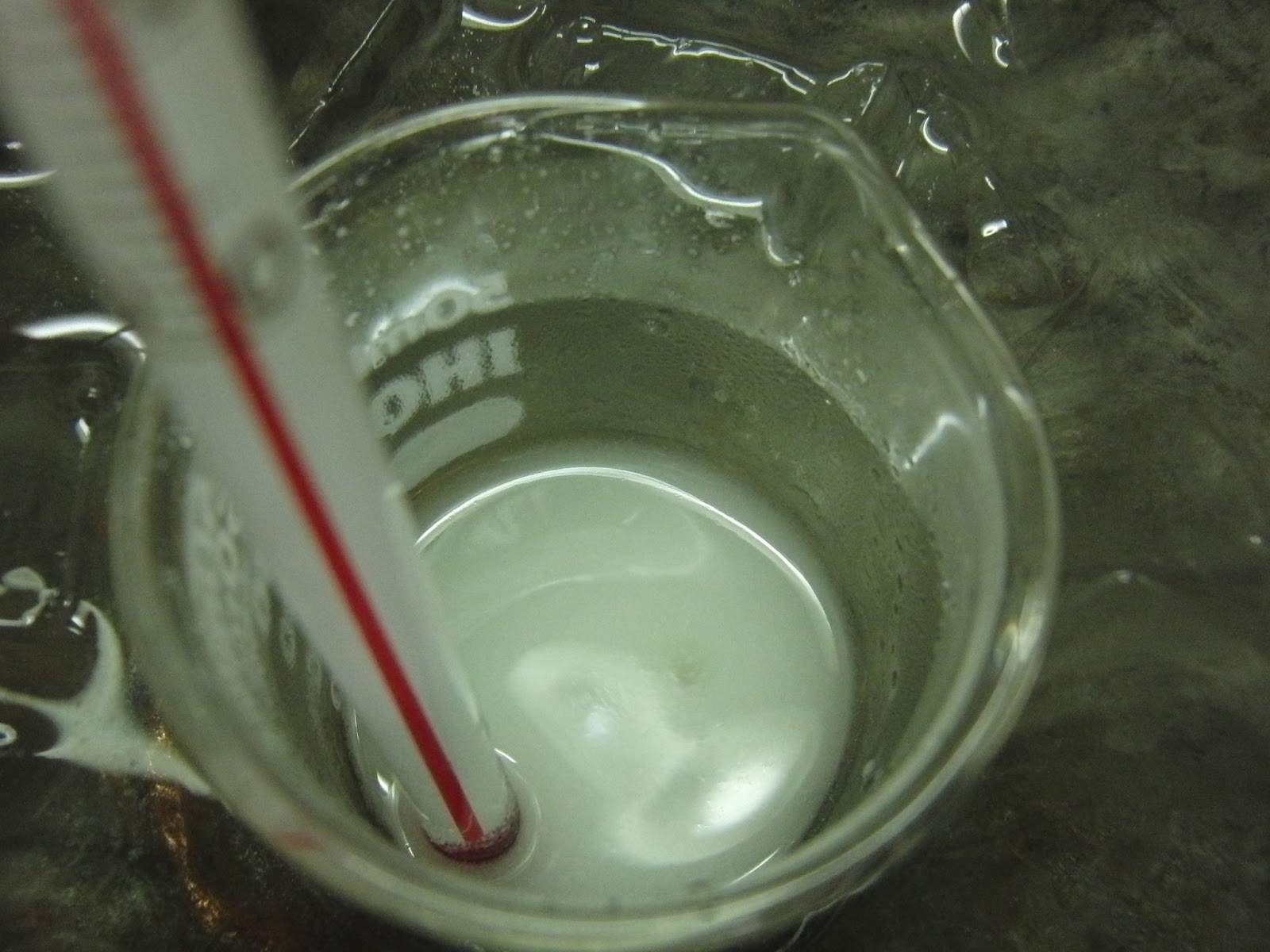
The aromatic nitration of acetanilide
is an exothermic reaction ; the temperature must be carefully controlled by
chilling, stirring, and the slow addition of reagents. Acetanilide is first dissolved
in the solvent, glacial acetic acid, by warming. Glacial acetic acid is used
because it is a polar solvent capable of dissolving acetanilide and the acetate
ion is a poor nucleophile so no substitution is possible. After the solution is
cooled, sulfuric acid is added; however, even with cooling, the temperature of
the solution rises almost 40E. Both the acetanilide solution and the nitrating
solution (a mixture of HNO3,
and H2SO4) must be chilled to about 10EC before the reaction
is begun.
To prevent dinitration of the
acetanilide, the nitrating mixture is added in small portions to the acetanilide
solution (and not vice versa) so that the concentration of HNO3, is kept at a minimum. After all the
HNO3, H2SO4 solution
has been added, the reaction mixture is allowed to warm slowly to room
temperature. If the reaction mixture has been kept excessively cold during the addition,
there will be a relatively large amount of unreacted HNO3, present, which may cause the
temperature to rise above room temperature. If this should happen, the mixture
must be rechilled.
The work-up procedure consists of
removal of the acids and crystallization of the product. Every trace of acid
must be removed because hydrogen ions catalyze the hydrolysis of the amide to p-nitroaniline
or its protonated cation. Most of the acid is removed by pouring the reaction mixture
onto ice and water, then filtering the flocculent yellow precipitate of
p-nitroacetanilide. The last traces of acetic acid are removed by
neutralization. Because bases also catalyze the hydrolysis of amides, the
neutralizing agent used is disodium hydrogen phosphate (Na2HPO4). This reagent reacts with acids to yield NaH2PO4. The result is a buffered solution with a pH near
neutral.
The crude product is air-dried before
crystallization. If all of the acid was removed, the product will be light
yellow. A deep yellow to yellow-orange product is indicative of the presence of
p-nitroaniline from hydrolysis. Unfortunately, p-nitroaniline is difficult to
remove from p-nitroacetanilide by crystallization.
Mechanism
Preparation of Nitronium Ion:

Nitration

Chemicals
1.
Acetanilide:
1.625g

2.
Disodium
hydrogen phosphate: 3.75g
3.
95%
ethanol: 15mL
4.
Glacial
acetic acid: 2.5mL
5.
15M
nitric acid: 0.875mL
6.
18.4M
sulfuric acid: 3.75mL
Procedure
1. Place 1.625 g of acetanilide in a Erlenmeyer
flask, add 2.5 mL of glacial acetic acid(CAUTION: strong irritant), and warm
the flask on a hot plate in a fume hood until the acetanilide dissolves.


2. Cool the flask in an ice bath to about
20℃

3. Add 2.5 mL of cold, conc. sulfuric
acid. The temperature of the mixture will rise to about 60℃. Chill the solution to about 10℃ in
an ice bath. (The solution will become very viscous.)
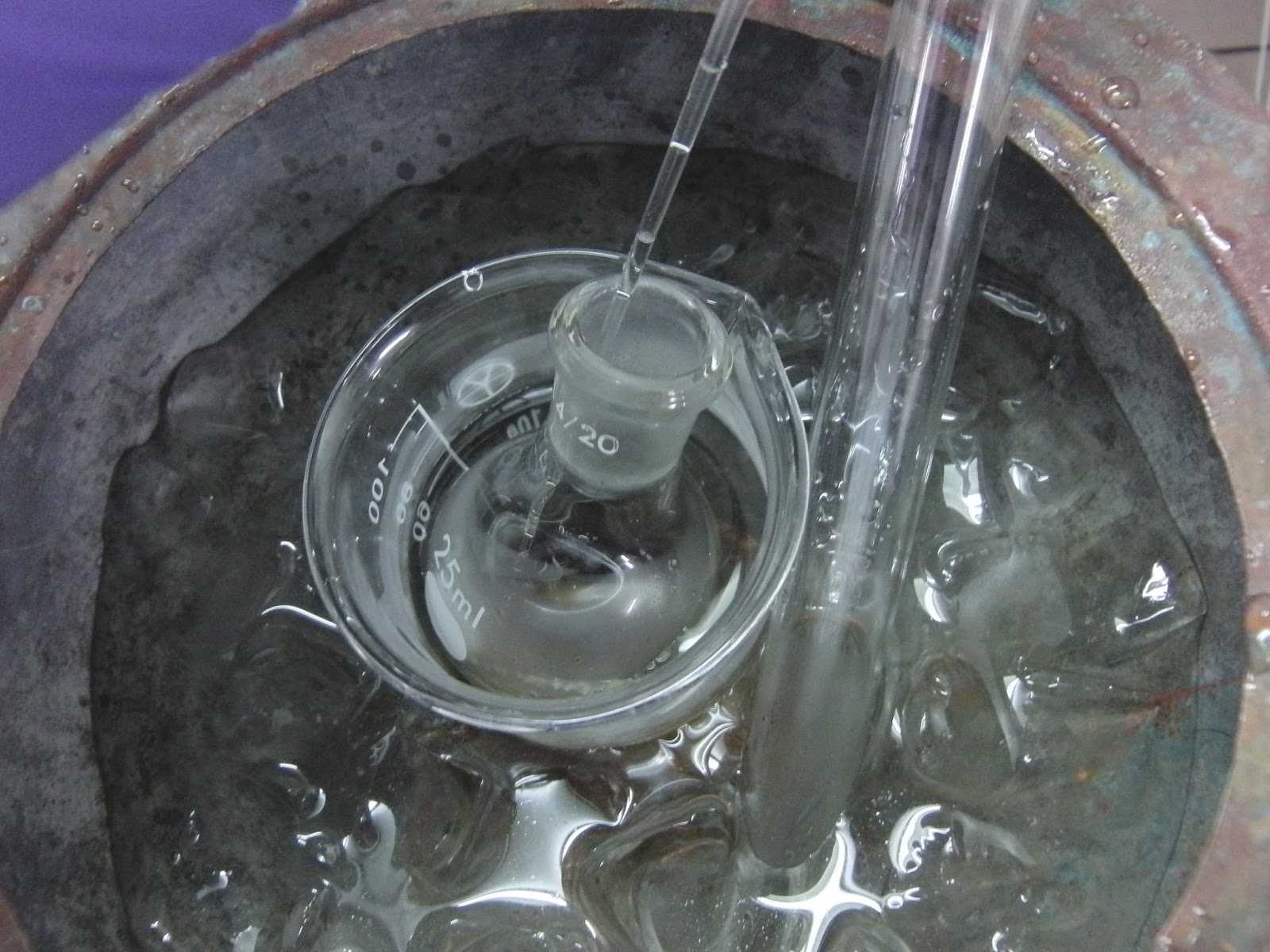
4. Mix 0.875 mL of conc. nitric acid and 1.25
mL of conc. sulfuric acid in a test tube, and chill the flask in an ice bath.

5. When both solutions are cold, slowly
add the HNO3, H2SO4 solution, 1 mL at
a time, to the acetanilide solution. Keep the
reaction flask in an ice bath so that the temperature of the reaction mixture
is maintained between 10-20℃. Stir the reaction mixture carefully after each
addition. The entire addition requires about 15 minutes.

6. After the addition is completed, allow
the reaction flask to stand at room temperature for 30 minutes. Monitor the
temperature; if it rises above 25℃, chill the flask in an ice bath. Should the rechilling
be necessary, allow the flask to stand for 30 minutes or more at room
temperature after the rechilling.

7. Pour the reaction mixture into a beaker
containing 25 mL of water and 6.25 g of cracked ice.
8. Using a large Buchner funnel, filter
the heavy lemon-yellow precipitate with vacuum. Press out as much aqueous acid
from the filter cake as possible with a spatula or clean cork while suction is
being applied. The precipitate is voluminous; use care in transferring it to
the Buchner funnel or a substantial amount of product will be lost.


9. Transfer the filter cake to a clean
250-mL beaker, and add 100 mL of 15% aqueous disodium hydrogen phosphate. Stir
the mixture to a paste-like consistency and refilter using vacuum.


10.
Wash
the beaker with two 30-mL portions of cold water. Finally, wash the filter cake
with an additional 50 mL of cold water. Press the filter cake with a spatula or
clean cork to remove as much water as possible, then dry the solid overnight on
a watch glass. Determine the yield and melting point.


Experimental
Record
|
Weight of p-nitroacetanilide(Theory)
|
2.170g
|
|
Weight of p-nitroacetanilide
|
1.650g
|
|
Yield
|
76.0%
|
|
Melting Point of
p-nitroacetanilide (theory)
|
216℃
|
|
Melting Point of
p-nitroacetanilide
|
210~214℃
|