Google Adsense

Monday, August 19, 2013

Preparation of Thioacetamide - Organosulfur Compounds - Lu Le Laboratory


Thioacetamide (TA) is an organosulfur compound. This white crystalline solid is soluble in water and serves as a source of sulfide ions in the synthesis of organic and inorganic compounds. It is a prototypical thioamide.

Thioacetamide was widely used in classical qualitative inorganic analysis as an in situ source for sulfide ions. Thus, treatment of aqueous solutions of many metal cations to a solution of thioacetamide affords the corresponding metal sulfide:

M2+ + CH3C(S)NH2 + H2O → MS(s) + CH3C(O)NH2 + 2 H+
(M = Ni, Pb, Cd, Hg)

Related precipitations occur for sources of soft trivalent cations (As3+, Sb3+, Bi3+) and monovalent cations (Ag+, Cu+). (Wikipedia)


Reaction Equation:


Chemicals

1.     Acetamide(Link to Preparation): 0.1500 g
2.     Phosphorus Pentasulfide(Link to Preparation): 0.1250 g
3.     Ammonium bicarbonate: saturated solution
4.     95% Ethanol

Procedure

1.     Add 0.1500g dried acetamide and 0.1250g crashed phosphorus pentasulfide in a test tube and bland the powder thoroughly.


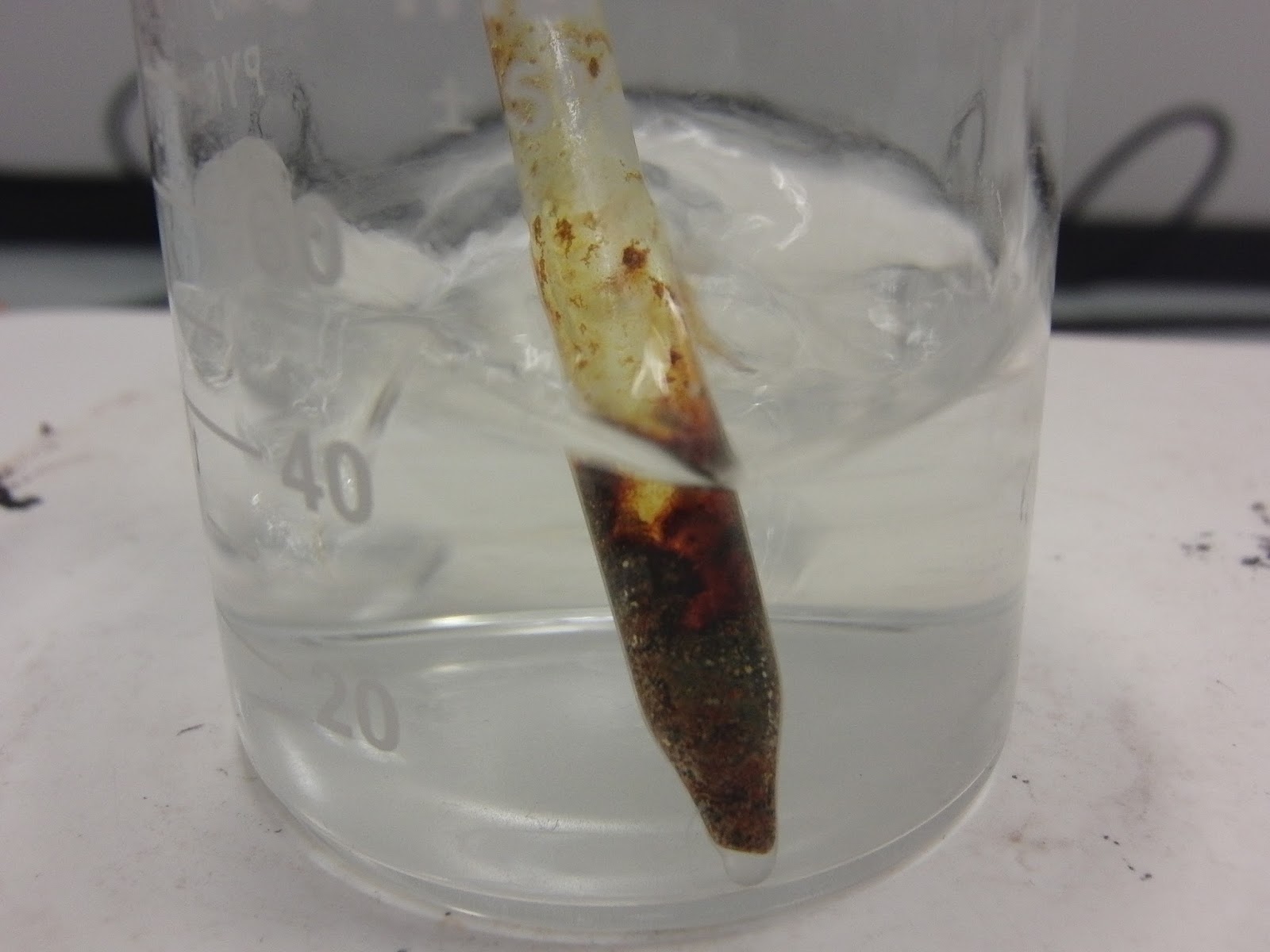
2.     Heat the mixture to 60℃ and then the mixture will melt and react spontaneously. When the temperature raise to 80~90℃, the reaction will become violent and release a lot of hydrogen sulfide[1].


3.     Keep the temperature at 85~100℃ for 3~4 hr.
4.     Leave the mixture to cool down .
5.     Neutralize the solid to pH 3~4 with saturated ammonium bicarbonate [2].

 
6.     Filter the yellowish solid.
7.     Recrystallize the solid with 95% ethanol.

 
Notes

[1] Some of hydrogen sulfide may release in the procedure. It should be handled in a fume hood.
[2] Do not add too much ammonia bicarbonate solution, because thioacetamide is very soluble in aqueous phase.

Experimental Record

Weight of Acetamide
0.1498g
Weight of Phosphorus Pentasulfide
0.1267g
Theoretical Weight of Thioacetamide
0.1904g
Weight of Thioacetamide (recrystalized)
0.0806g
Yield
42.33%


Friday, August 16, 2013

Preparation of Phosphorus Pentasulfide - A Thionation Reagent - Lu Le Laboratory


Phosphorus pentasulfide is the inorganic compound with the formula P4S10. This yellow solid is the one of two phosphorus sulfides of commercial value. Samples often appear greenish-gray due to impurities.


 In organic chemistry P4S10 is used as a thionation reagent. Reactions of this type require refluxing solvents such as benzene, dioxane or acetonitrile with P4S10 dissociating into P2S5. P2S5 can be trapped for example as the pyridine complex. Ketones are converted to thioketones. In esters, imides and lactones the oxygen atom can also be replaced by sulfur. With amides the reaction product is a thioamide. With 1,4-diketones the reagent forms a thiophene. Compared to the better known Lawesson's reagent P4S10 suffers from reduced yields.   (Wikipedia)


Chemicals


1.     Red phosphorus (pre-dried) : 1.6722 g

2.     Sulfur (resublimed) : 4.3278 g


Apparatus


1.     A Hot plate

2.     A crucible with a cover

3.     Spatula

4.     Mortar and pestle


Procedure


1.     Add 1.6722g red phosphorus powder and 4.3278 g resublimed sulfur in a crucible (with a cover).


2.     Heat the crucible genteelly to about 300℃[1] and leave it for 5 minutes.


3.     Cool the crucible in a desiccator.

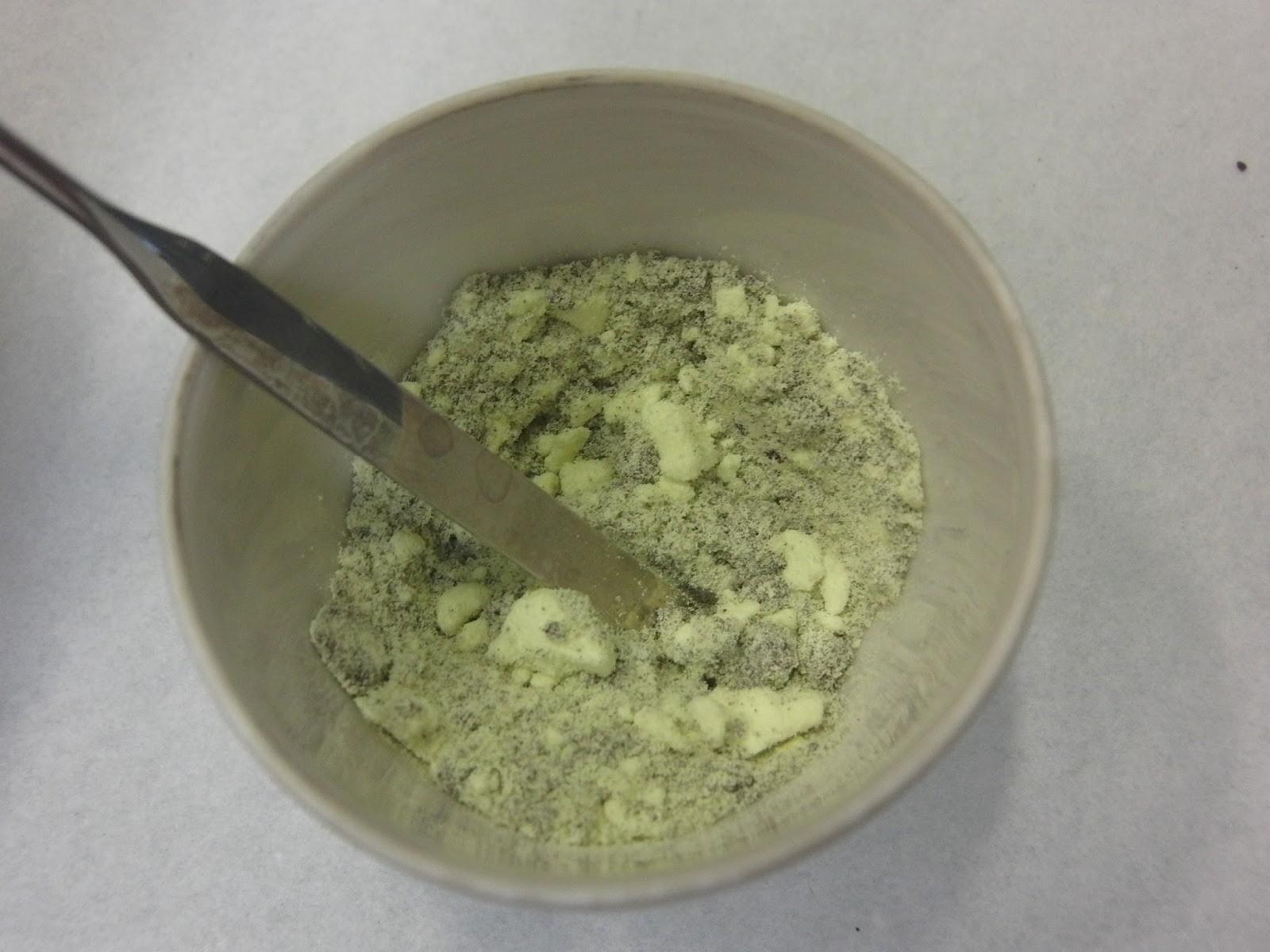
4.     Scratch the solid from the crucible and smash it into powder with a mortar and pestle.[2]


 It is a greenish-yellow powder


5.     Preserve it in an air-tight vessel.


Notes


[1] Don’t open the cover before you cool the crucible to room temperature or it may cause fire and produce toxic gases. Once it burns, use dry sand or dry powder extinguisher. Don’t use water to extinguish fire or it may cause explosion.


[2] This procedure must be done in a hood or a ventilate area. If high concentration of hydrogen sulfide (with an odor of rotten egg) is inhaled, it will rapidly absorbed through the lung into blood. It may cause coma and may be rapidly fatal.


[3] This product is highly flammable and very toxic to aqueous organisms


[4] Must see the MSDS of phosphorus pentasulfide before you handle it.


Experimental Record


Weight of Phosphorus Pentasulfide
4.4102 g
Theoretical Weight of Phosphorus Pentasulfide
6.0000 g
Yield
(4.4102 g) / (6.0000 g) x 100%

= 73.50%


Preparation of Acetamide - Amidation of Ester - Lu Le Laboratory


Acetamide is an organic compound. It is the simplest amide derived from acetic acid. It finds some use as a plasticizer and as an industrial solvent. The related compound N,N-dimethylacetamide (DMA) is more widely used, but it is not prepared from acetamide.

Acetamide has been detected near the center of the Milky Way galaxy. This finding is potentially significant because acetamide has an amide bond, similar to the essential bond between amino acids in proteins. This finding lends support to the theory that organic molecules that can lead to life (as we know it on Earth) can form in space.

In addition, acetamide is found infrequently on burning coal dumps, as a mineral of the same name.  (Wikipedia)

Reaction Equations


Mechanism


Chemicals

1.     Ethyl acetate: 30.00 g
2.     Aqueous ammonia: 40.00 g

 
Procedure

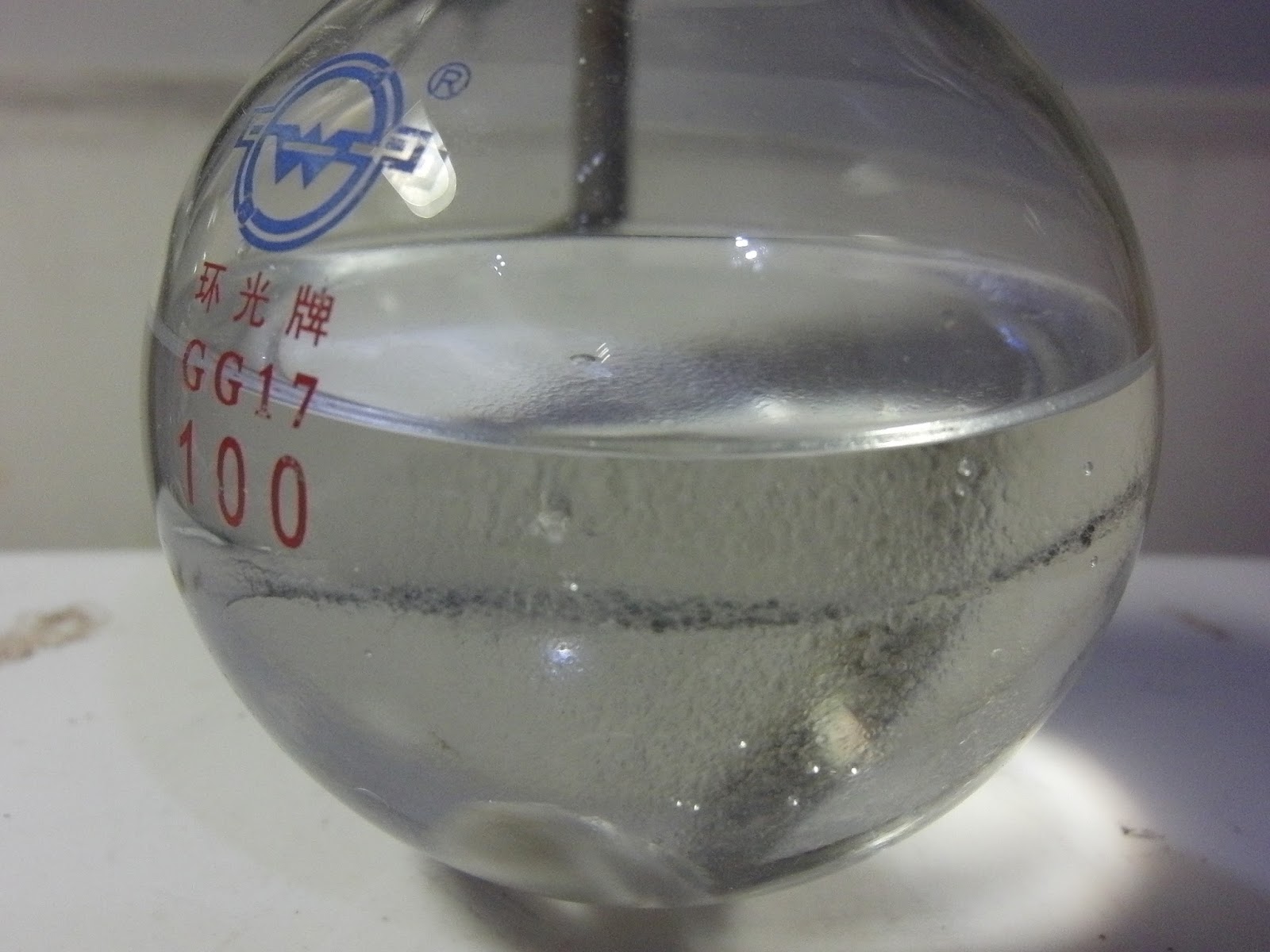
1.     Add 33.26 mL ethyl acetate and 44.44 mL aqueous ammonia in a 150 mL round-bottomed bottle.
 

2.     Stir it thoroughly at 25~27℃ for 2~3 hr.


3.     Stand the mixture for 24 hr. If the solution would not separate into two layers, it shows the reaction is finished.
4.     Distill the mixture to concentrate the mixture to the half of the original volume.
 

Some ammonia will release in this process, remember to absorb the exhaust.

5.     Filter the solution.
6.     Concentrate the solution to viscosity.


7.     Cool the solution in an ice bath.


8.     Filter the solution and wash it with a little amount of cold ethanol.

 
9.     Put it in an oven to evaporate ethanol. 

 
10.   Put it in a vacuum desiccator for 24 hr.


11.   Calculate the yield.

Experimental Record

Weight of Ethyl acetate
30.0000 g
Weight of acetamide
8.1719 g
Theoretical Weight of Acetamide
20.1124 g
Yield
(8.1719 g) / (20.1124 g) x 100%

= 40.63 %